What the Walls Are Teaching: How School Architecture Shapes Learning, Behavior, and Your Child's Daily Experience
When families schedule a campus tour, they typically arrive with a mental checklist: Are the classrooms clean? Does the library look well-stocked? Is there enough outdoor space? These are reasonable questions. But most parents leave a school visit having evaluated the surface of a building rather than its function—and those two things are rarely the same.
The physical layout of a school is not merely a container for education. It is, in a very real sense, part of the education itself. Researchers in the field of learning environments have documented for decades that spatial design influences cognitive performance, social behavior, emotional regulation, and even a student's sense of belonging. If you are mapping out school options for your child, the architecture deserves a place on your evaluation framework.
Why Physical Space Functions as a Hidden Curriculum
The term "hidden curriculum" typically refers to the unspoken values and norms that schools transmit beyond formal lesson plans—things like expectations around authority, competition, and conformity. But physical space operates the same way. A school's layout communicates priorities before a single teacher opens their mouth.
Consider a school designed around long, corridor-based hallways connecting rows of isolated classrooms. That design implicitly enforces a model of education built on separation: students move in controlled streams, each subject occupies its own sealed room, and interaction between grade levels is minimized. Contrast that with a school built around shared commons, flexible breakout spaces, and classrooms with glass walls or open partitions. That environment communicates collaboration, transparency, and the expectation that learning is not a solitary act.
Neither design is inherently superior—but each is better suited to different kinds of learners and different educational philosophies. The mismatch between a child's learning style and the physical environment they occupy can produce frustration, disengagement, and social difficulty that parents often misattribute to the child rather than the setting.
Classroom Configuration: More Than Furniture Arrangement
The interior design of individual classrooms carries significant weight. Research published by the University of Salford in the United Kingdom—widely cited in American educational design discussions—found that classroom features including natural light, air quality, and the flexibility of the physical layout accounted for a measurable portion of the variation in student academic progress over a single school year.
During a school visit, look past the bulletin boards and focus on a few specific elements:
Natural light and window placement. Classrooms with adequate natural light have been linked to improved mood, reduced fatigue, and stronger reading performance. Rooms that rely exclusively on fluorescent overhead lighting—particularly older fixtures that flicker or buzz—create environments that are physiologically harder to sustain attention in over a full school day.
Acoustic design. Noise is one of the most underappreciated variables in a learning environment. Open-plan classrooms, while visually dynamic, can create acoustic chaos that disproportionately affects students with auditory processing differences, attention difficulties, or anxiety. Ask whether classrooms have acoustic panels, carpeting, or other sound-dampening features—especially if your child is sensitive to sensory input.
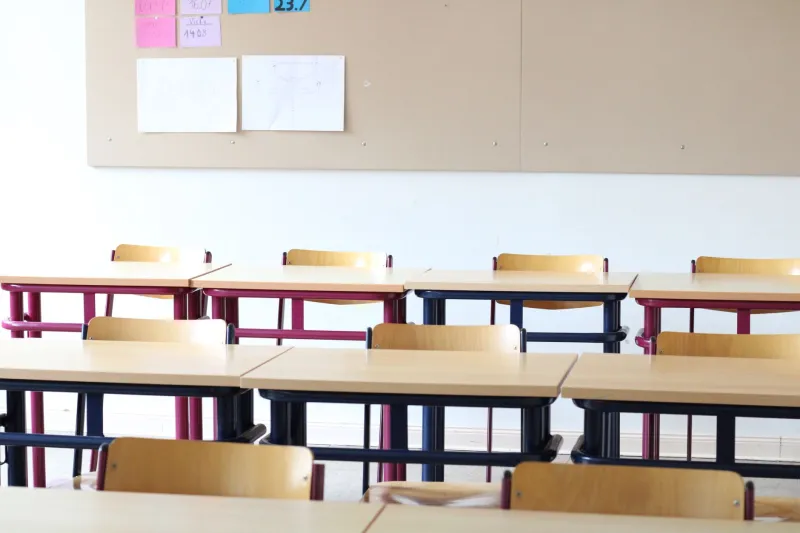
Spatial flexibility. Classrooms designed around fixed rows of desks signal a pedagogical approach centered on direct instruction and individual work. Rooms with moveable furniture, varied seating options, and defined small-group areas suggest that the school values collaborative and project-based learning. Neither is wrong, but one will likely suit your child better than the other.
Hallways, Commons, and the Architecture of Social Life
The spaces between classrooms matter as much as the classrooms themselves. Hallways are not simply transit corridors—they are where a significant portion of a student's social life unfolds. The design of these transitional spaces influences whether students feel crowded and anxious or comfortable and seen.
Schools with narrow, high-traffic hallways can create daily experiences of physical and social pressure that accumulate over time, particularly for students who are introverted, conflict-averse, or navigating social difficulty. Wider hallways with alcoves, seating areas, and natural light create conditions where brief social interactions can happen on the student's own terms rather than through forced proximity.
Look also at where the school's communal spaces—cafeterias, gymnasiums, outdoor areas—sit in relation to classrooms. Schools that physically separate students by grade level throughout the entire day limit organic cross-age mentorship and social exposure. Schools that design for mixed-age gathering, even informally, create opportunities for social development that no structured program can fully replicate.
Outdoor Space and the Often-Overlooked Question of Access
American schools vary enormously in how much outdoor space they provide and, critically, how often students are actually permitted to use it. A spacious campus with athletic fields means little if the school's schedule and culture keep students indoors for the majority of the day.
During your visit, ask not just whether outdoor space exists, but how frequently students access it and for what purposes. Is recess treated as a genuine break, or has it been compressed to accommodate test preparation? Are there shaded areas, green spaces, or natural elements in the outdoor environment, or is the campus primarily concrete and asphalt? Research consistently links access to natural environments with reduced stress, improved attention, and better social outcomes in children—factors that have a direct bearing on academic performance.
What to Actually Look for During a Campus Tour
Armed with this context, a campus visit becomes a much richer exercise. Rather than simply following the admissions guide's narrative, use the physical environment as your own data source.
Pay attention to how students move through the building during passing periods. Do they appear relaxed, or is the energy tense and compressed? Notice whether teachers are visible in transitional spaces, and whether those interactions look supervisory or genuinely relational. Observe where students congregate voluntarily—the spaces children choose to occupy when given freedom reveal a great deal about which parts of a campus feel welcoming.
Ask to see a classroom that is not staged for the tour. Schools that only show curated spaces are, in effect, showing you a version of themselves they want you to believe in. A school confident in its environment will be comfortable with an unscheduled glance into an ordinary Tuesday afternoon.
Finally, consider your child's specific profile. A student who thrives on structure and quiet concentration may flourish in a more traditional, compartmentalized building. A student who learns through movement, conversation, and exploration may find that same environment stifling. The goal is not to find the most architecturally impressive school on your list—it is to find the physical environment that allows your particular child to do their best work.
Mapping the Right Environment
SchoolMap exists to help families look beyond surface-level rankings and understand the full picture of a school's fit. Physical space is one of the most tangible dimensions of that fit—and one of the most overlooked. Before you finalize your school list, consider making the building itself part of your evaluation criteria. The walls, after all, are always teaching. The question is whether you have taken the time to listen.