Who Your Child Learns With: The Underestimated Power of Peer Environment in School Selection

When parents sit down to evaluate schools, they typically reach for the same set of instruments. Proficiency rates. Student-to-teacher ratios. AP course offerings. Graduation percentages. These metrics are not without value—they capture real dimensions of institutional quality. But they leave out something that decades of educational research suggest may matter just as much, if not more: the human environment that surrounds a child during the most formative years of their development.
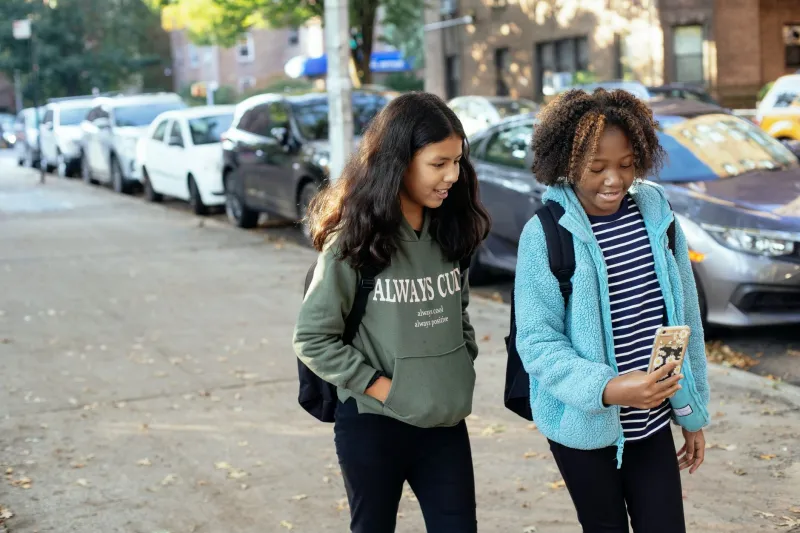
The peer group—who a student sits beside in class, who they eat lunch with, who shapes the social norms they navigate daily—exerts an influence on academic motivation, long-term aspiration, and life outcomes that standardized metrics are not built to measure. For families using SchoolMap to make one of the most consequential decisions in their child's life, understanding how to assess peer culture may be the most underutilized skill in the school selection toolkit.
What the Research Actually Says
The relationship between peer environment and student outcomes is one of the most consistently documented findings in educational sociology. Economists and education researchers have studied it across countries, grade levels, and demographic groups, and the conclusions are remarkably stable: the students around your child influence your child.
This influence operates through several mechanisms. Academically oriented peer groups tend to normalize effort, curiosity, and persistence—creating social environments where intellectual engagement is neither unusual nor socially costly. Peer groups in which academic disengagement is the dominant norm can have the opposite effect, regardless of the quality of instruction a student receives.
Longitudinal research, including studies tracking students into adulthood, has found that peer environment during middle and high school correlates with college enrollment rates, degree completion, and even career outcomes—effects that persist after controlling for individual student characteristics and school-level factors. The implication for families is significant: choosing a school is, in part, choosing a community that will shape your child's sense of what is normal, possible, and worth pursuing.
Beyond Socioeconomics: What Peer Culture Actually Encompasses
It would be reductive to equate peer environment with socioeconomic composition alone, though the two are related. Peer culture is a more complex phenomenon that encompasses academic norms, social hierarchies, attitudes toward difference, and the degree to which a school community supports intellectual risk-taking.
A school serving a predominantly affluent population may nonetheless harbor a peer culture in which academic effort is socially stigmatized or where social stratification is rigid and exclusionary. Conversely, schools with economically diverse student bodies sometimes develop remarkably cohesive academic cultures when leadership intentionally cultivates them.
Families evaluating peer environment should resist the temptation to use demographic data as a proxy for culture. The data provides context; it does not tell the whole story.
How to Assess Peer Culture Without a Survey
Peer culture is not something a school will advertise directly, and it is not something that appears in state report cards. Assessing it requires observation, conversation, and a willingness to look beyond the curated version of school life that admissions processes present.
Observe Unscripted Moments
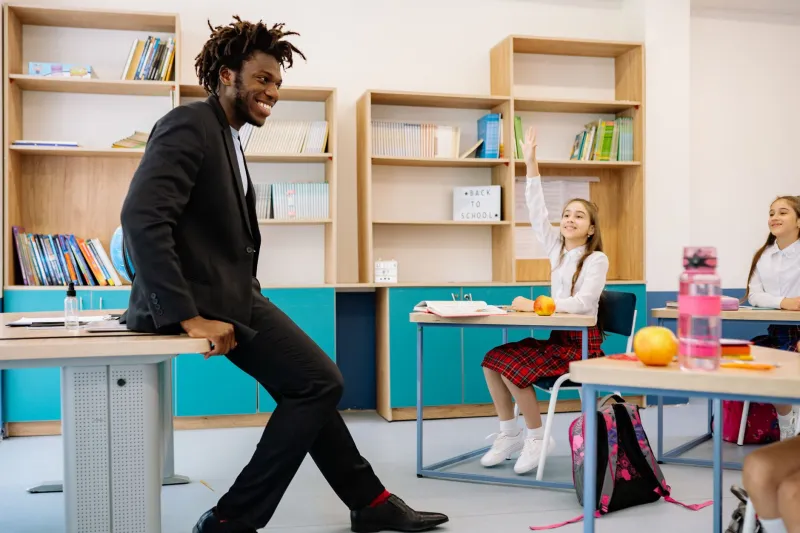
Request a campus visit that includes unstructured time—hallway transitions, lunch periods, or the moments before and after school when students are not performing for an audience. The social dynamics visible in these moments reveal far more about peer culture than any classroom demonstration.
Pay attention to how students interact with one another and with staff. Do students appear engaged or disengaged? Are interactions between different groups of students fluid or rigidly stratified? How do students treat peers who appear different from them?
Talk to Students, Not Just Administrators
School administrators are skilled communicators who have fielded parent questions for years. Students, particularly older ones, are far less practiced at managing impressions. A direct, genuine conversation with a current student—asking what they like, what they find challenging, what they wish were different—can yield candid insight that no tour script will offer.
Ask students what the school is known for among peers. Ask what kinds of students tend to thrive there. Ask what social life looks like. The answers, taken together, sketch a portrait of peer culture that no brochure will replicate.
Review Extracurricular Participation Patterns
The breadth and depth of extracurricular participation is a useful proxy for peer culture. Schools where a high proportion of students are involved in clubs, teams, arts programs, and community activities tend to have stronger cultures of engagement and belonging. Schools where extracurricular participation is concentrated among a small subset of students may have more fragmented peer communities.
Ask schools for participation rates, not just the existence of programs. A school that lists thirty clubs on its website but whose student body engages with only a handful of them is communicating something important about the actual culture of involvement.
The Question of Fit
Peer environment is not a universal good or ill—it is a matter of fit. A child who is deeply intellectually curious and socially confident may thrive in a competitive, academically rigorous peer environment. A child who is still developing confidence and needs more social scaffolding may flourish in a community that prioritizes collaboration over competition.
Parents who know their child well—who understand how they respond to social pressure, what environments bring out their best, and where they tend to struggle—are better positioned to evaluate peer culture than those who rely solely on aggregate metrics. The question is not which school has the most impressive peer group by conventional measures. The question is which peer community will bring out the best in your specific child.
Diversity as an Educational Asset
Research on peer environments consistently highlights another dimension worth deliberate consideration: the educational value of socioeconomic, cultural, and experiential diversity within a student body. Students who learn alongside peers from different backgrounds develop broader perspectives, stronger collaborative skills, and greater capacity for navigating complex social environments—competencies that matter enormously in higher education and professional life.
Families who prioritize finding a school with the highest concentration of students who look or think like their own child may be optimizing for comfort at the expense of growth. The most educationally enriching peer environments are often those that combine high academic expectations with genuine human diversity.
Mapping the Social Landscape Before Enrollment
SchoolMap's mission is to help families navigate educational decisions with greater clarity and confidence. Assessing peer environment is among the most nuanced dimensions of that navigation—but it is not beyond the reach of any engaged parent willing to look carefully.
The metrics will always be available. The peer culture requires more deliberate investigation. Families who invest that effort tend to make enrollment decisions they are far less likely to regret.